Common Cybersecurity Threats Small Businesses Face

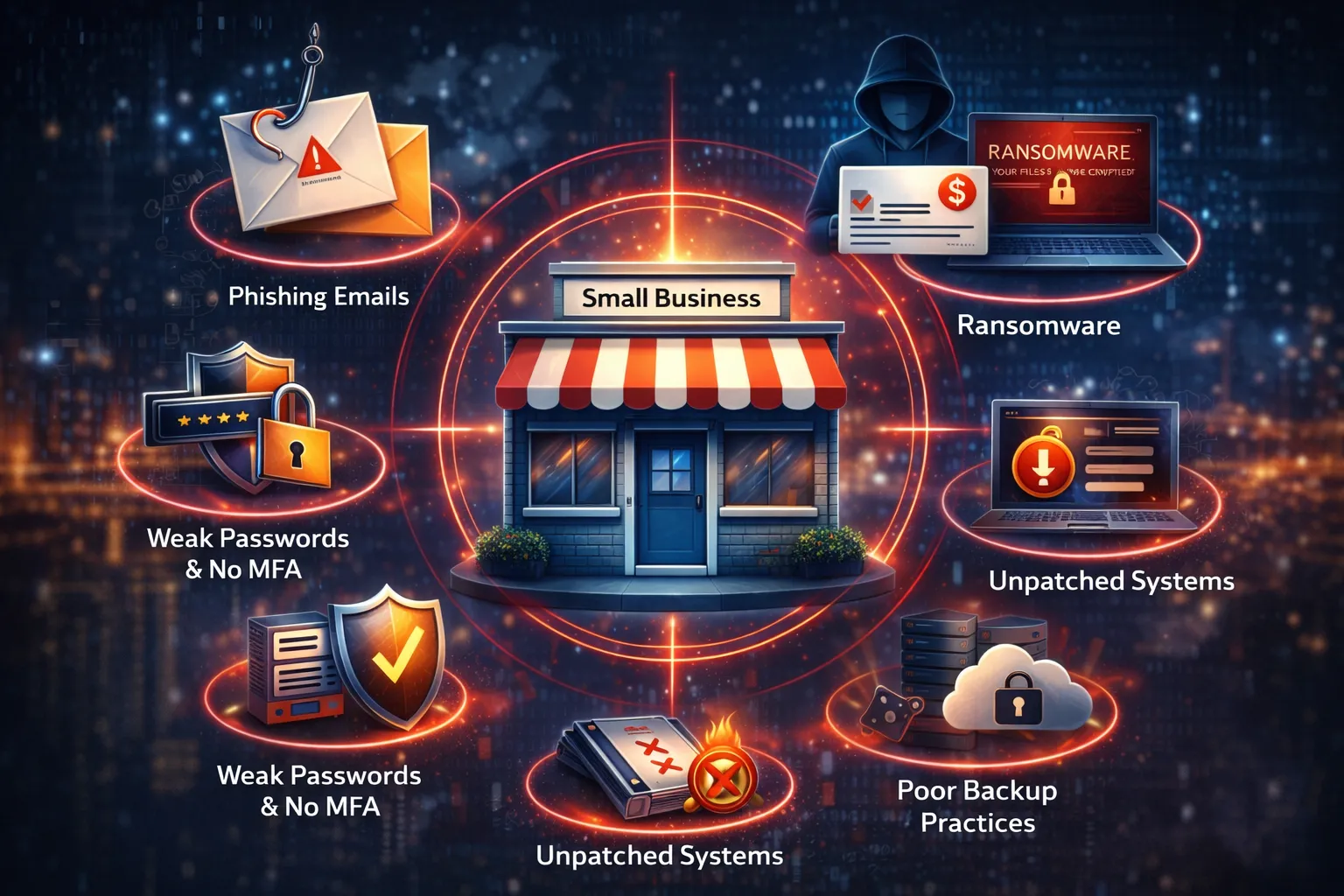
When people think about cybersecurity threats, they often picture large companies being targeted by sophisticated attackers. In reality, small and mid-sized businesses are often easier targets. Not because they’re more valuable—but because they’re easier to break into. Here are some of the most common threats SMBs face today. 1. Phishing Emails Phishing is still the most common way attackers get in. These emails are designed to: trick users into clicking a link steal login credentials install malware They often look like: Microsoft 365 login alerts invoices from vendors messages from...
How to Spot a Phishing Email

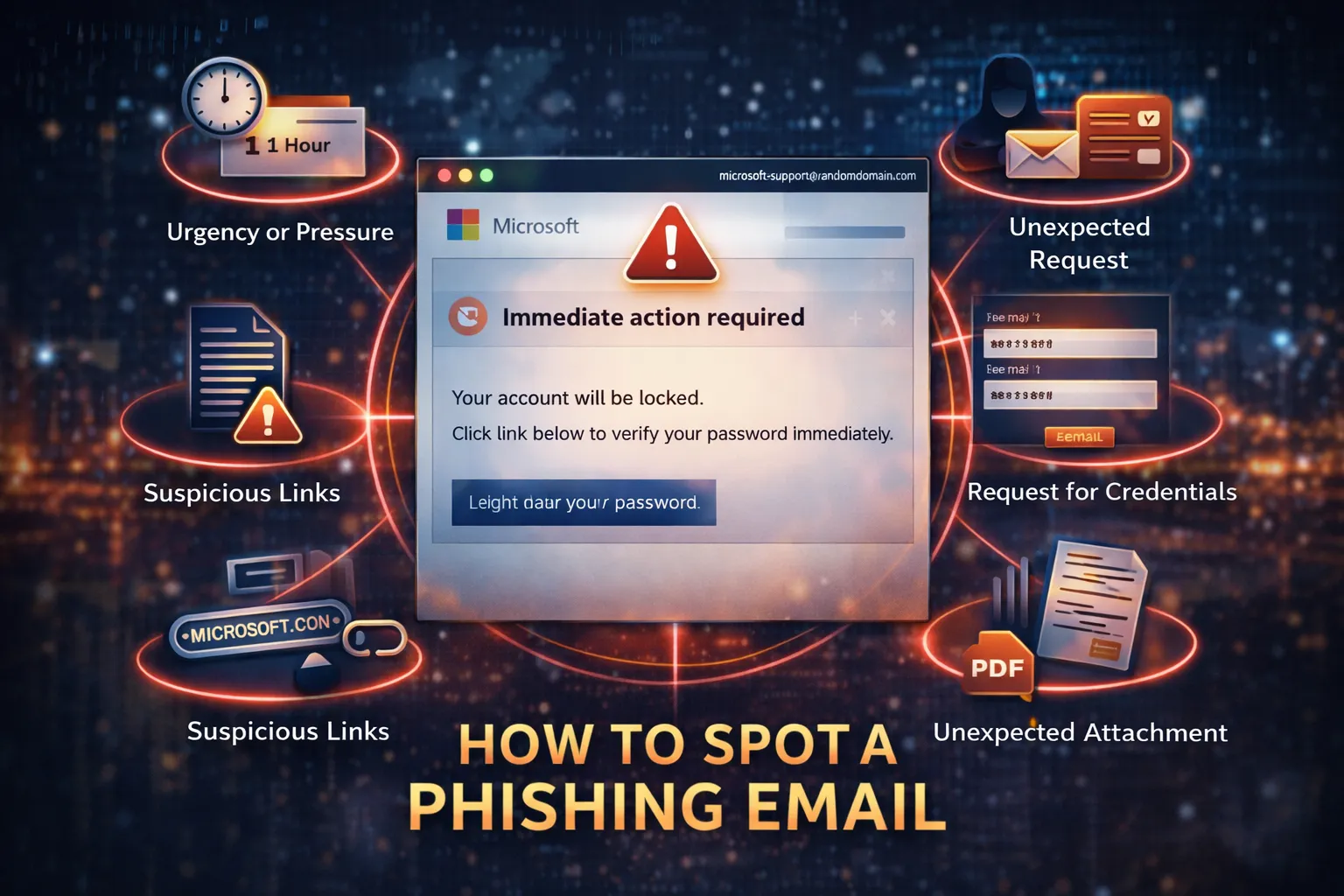
Phishing emails are one of the most common ways attackers get into a business. They don’t rely on hacking systems—they rely on tricking people. The good news is most phishing emails have warning signs. You just need to know what to look for. What Is a Phishing Email? A phishing email is designed to: trick you into clicking a link get you to enter your password or convince you to take an action (like sending money) They often pretend to be: Microsoft or Google login alerts invoices or payment requests messages from coworkers or executives Common Signs of a Phishing Email 1. Urgency or Pressure...

How Attackers Bypass MFA (and How to Stop Them)

Multi-factor authentication (MFA) is one of the best protections you can put in place. But it’s not perfect. Attackers know this—and they’ve adapted. Understanding how MFA gets bypassed is key to making sure it actually protects your business. Wait… I Thought MFA Was Secure? It is. MFA stops a huge percentage of basic attacks. But attackers don’t try to “break” MFA directly. Instead, they: trick users steal sessions or exploit weak configurations Most MFA bypasses are not technical—they’re behavioral. 1. MFA Fatigue (Push Bombing) This is one of the most common attacks today. How it works: An...

What Is MFA and Why Does Your Business Need It?

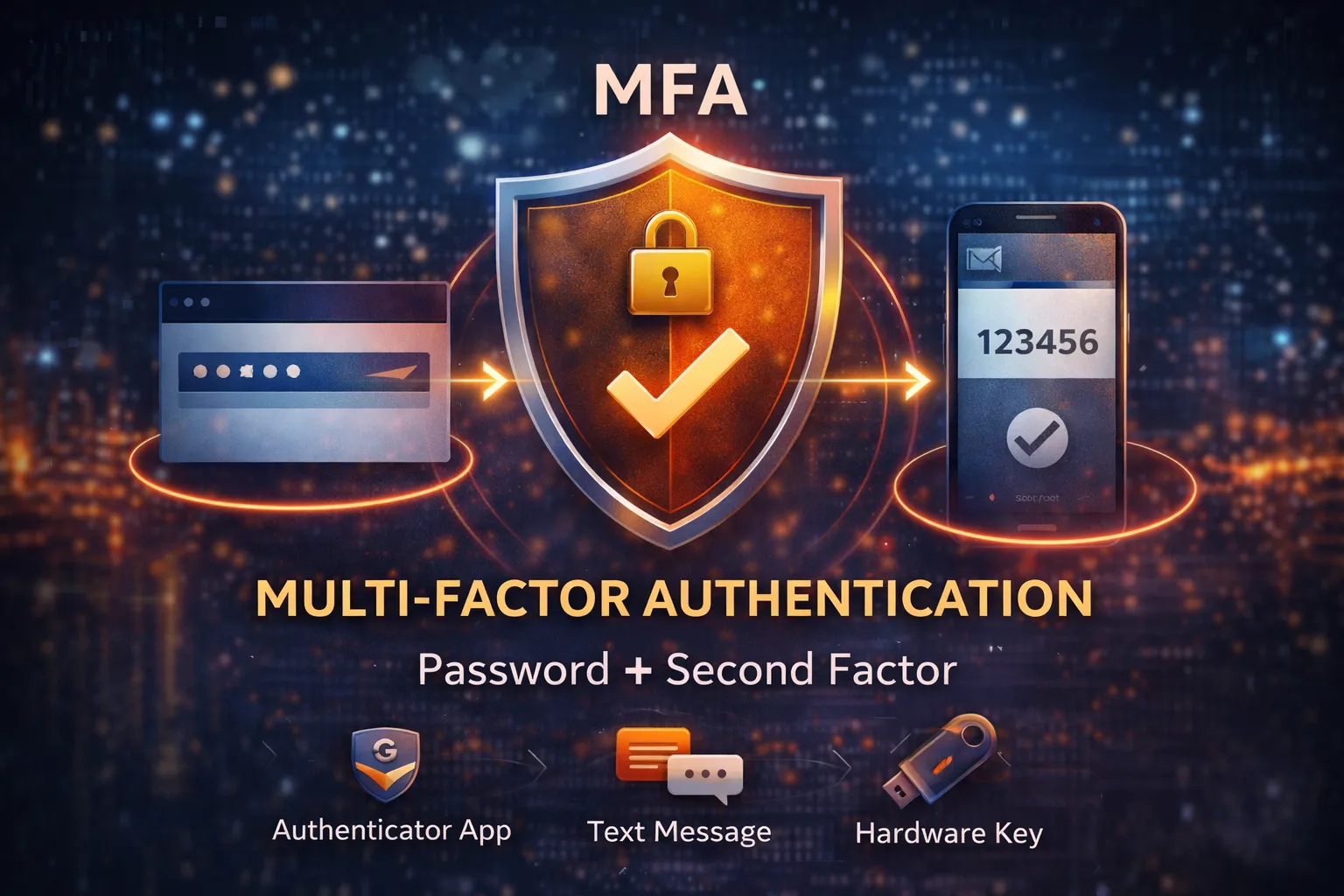
Multi-factor authentication (MFA) is one of the simplest and most effective ways to protect your business. But it’s also one of the most misunderstood. Most people know they “should have it,” but don’t fully understand what it does—or why it matters. What Is MFA? MFA stands for multi-factor authentication. It means you need more than just a password to log in. Instead of only entering a password, you also need something else, such as: A code from an authenticator app (TOTP) A push notification on your phone A text message with a verification code A physical security key (yubikey or smartcard)...

Cybersecurity vs IT Support — What’s the Difference?

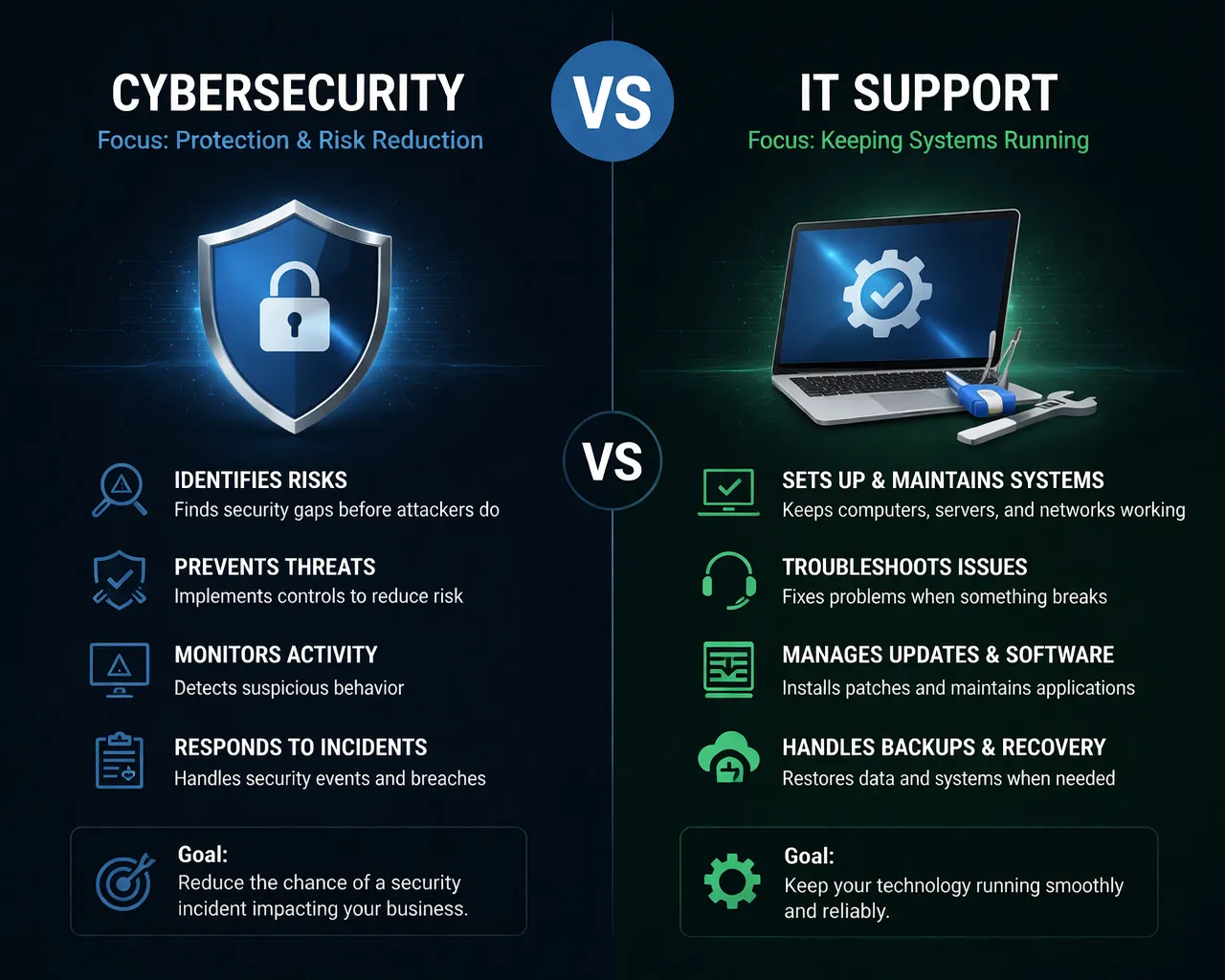
Many small and mid-sized businesses rely on an IT provider to keep things running. And for the most part, that works well. But when it comes to cybersecurity, there’s often confusion about where IT support ends—and where security actually begins. Understanding that difference is important. What Is IT Support? IT support (often provided by an MSP) focuses on keeping systems working. That typically includes: Setting up computers and servers Managing networks and WiFi Installing and maintaining software Help desk support (fixing issues when things break) Managing backups and updates In simple...